What is Vibe Coding and why it won't replace real developers (yet)
Focus

By now, everyone knows it: artificial intelligence has brought the world of software development to a breaking point with the past. Every day, new tools appear promising to do everything "for you," with a monthly subscription and without hiring anyone.
Over the past year, the term Vibe Coding has become very popular, moving from industry jargon to become the word of the year according to the Collins Dictionary.
A name that effectively describes the results it promises: the creation, through artificial intelligence, of websites and applications without actually writing a single line of code, but only by indicating, through prompts, the characteristics that such software must have.
For many, Vibe Coding is the symbol of how AI is redefining creativity and productivity, opening the door to the ideas and creativity of those who are not industry professionals.
Like every major phase of change, it's time for concerns, ethical-moral doubts, and a general sense of uncertainty about the future to emerge. For this reason, we decided to write an article that could analyze the impacts of this technology. Because the question is not "will AI replace developers" but "who decides what the software does and with what responsibilities"?
How does Vibe Coding work?
Vibe Coding represents a new approach to programming, in which users express their intentions using natural language, and AI transforms thought into executable code.
In this way, Vibe Coding allows AI to be used as a programming assistant, automating the most tedious processes and opening the doors of software development even to those who have no experience in the field.
Vibe Coding follows a very specific philosophy, which prioritizes experimentation over other aspects such as structure and performance: the spirit is "first you create, then you refine." This allows developers to work in a more agile context, enabling real-time prototypes and facilitating innovation through more flexible methods.
Vibe Coding was an innovation initially born as a tool for experienced developers, to facilitate the creative process and quickly test new prototypes, eventually to be perfected before being released to the public. Only later was it proposed to the general public as a solution to create websites and applications independently "without knowing how to code"
A fascinating idea, which is often told as the beginning of the end for developers. However, we believe this is a partial narrative.
Not just a matter of code.
The most enthusiastic promote Vibe Coding as a magic wand for building digital products without skills. The most skeptical, instead, dismiss it as something immature, full of errors, destined to remain inferior to any human developer.
One thing must be made clear right away: these services are very young, and it's reasonable to expect that the technical quality of the outputs will improve rapidly.
Code, in fact, is by its nature a sequence of precise instructions, based on consolidated best practices and standards: an area in which AI can become increasingly effective. For this reason, the interesting question is not "who writes better code?", but "what kind of code are we producing, and for what context?
The idea of truly "Code Free" development is misleading for two reasons: Vibe Coding is not magic. To use it you need foundations in UX and UI, attention to compliance, and the ability to formulate clear prompts. You must know how to translate an idea into instructions comprehensible to an AI model. It devalues the work of programmers, presenting it as superfluous. In reality, they are the ones who ensure that websites, apps, and platforms function over time in a safe and sustainable way.
When does it make sense to use Vibe Coding?
Vibe Coding works particularly well during exploratory phases, when ideas are still in motion and nothing is actually defined. Moments of prototyping, where you're not building but rather trying to understand if it's worth building something.
It's also useful when working on rough demos or MVPs (minimum viable products), to show drafts to a client, a stakeholder, or a team to make a decision: here what's needed is to make the idea tangible, rather than create a finished system, destined to last over time.
Vibe Coding is therefore an excellent ally for reducing the time between an idea and output, unlocking creative flow and making visible in a short time what would otherwise remain abstract.
Finally, Vibe Coding is useful during the learning phase: for exploring a new technology, writing perfect code is not the priority. First you need to understand how a system reacts, then eventually fix it.
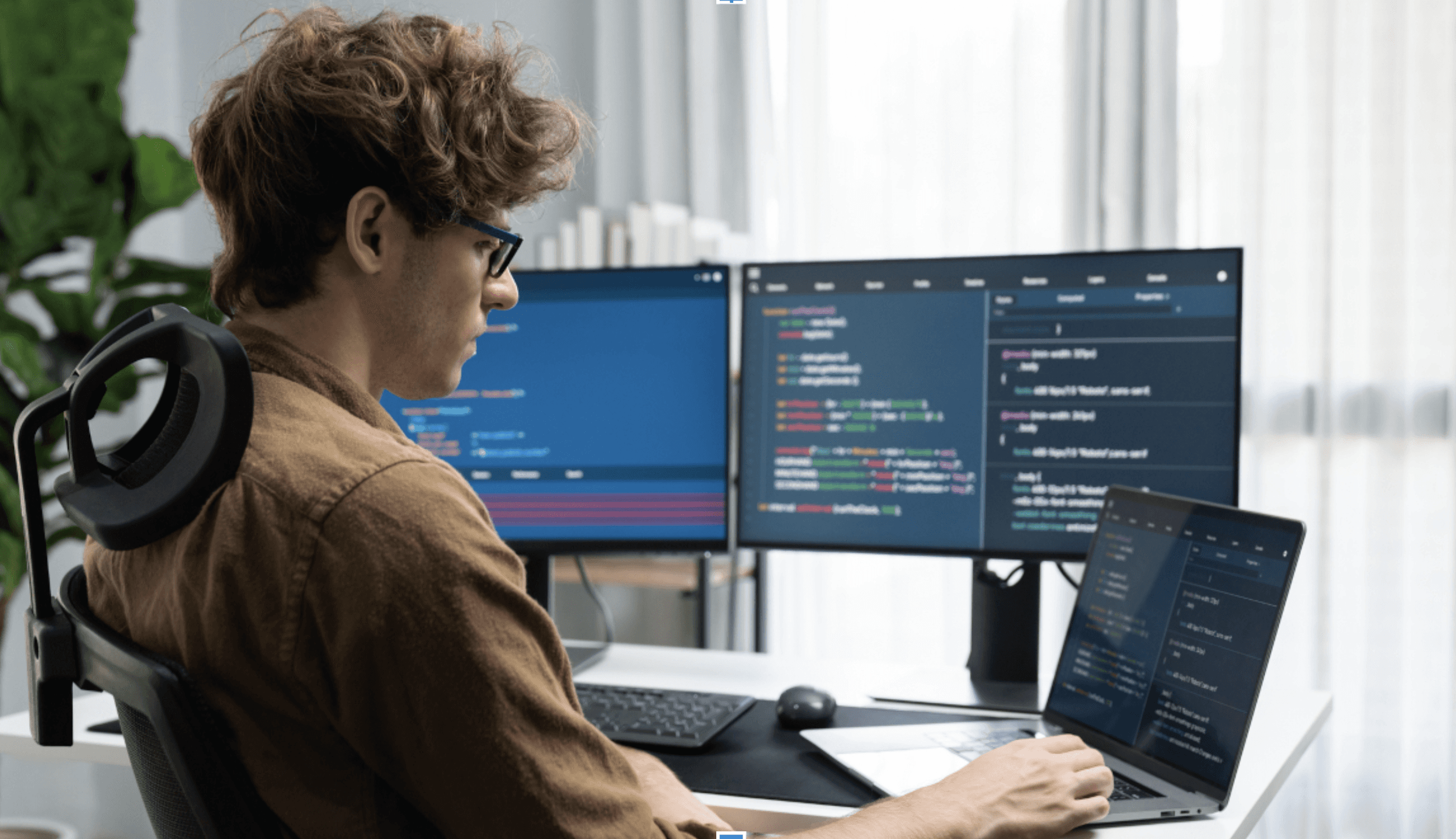
The real issue: standard solutions versus custom solutions.
It's often overlooked that Vibe Coding naturally lends itself to proposing standard solutions. You may have noticed, for example, that illustrations produced by Artificial Intelligence tend to be similar to each other, even if they're the result of different prompts written by different people.
If the digital market has always offered pre-packaged websites based on templates, CRMs, management systems and vertical software with locked features, and "ready-made" platforms that solve common problems, Vibe Coding accelerates this trend.
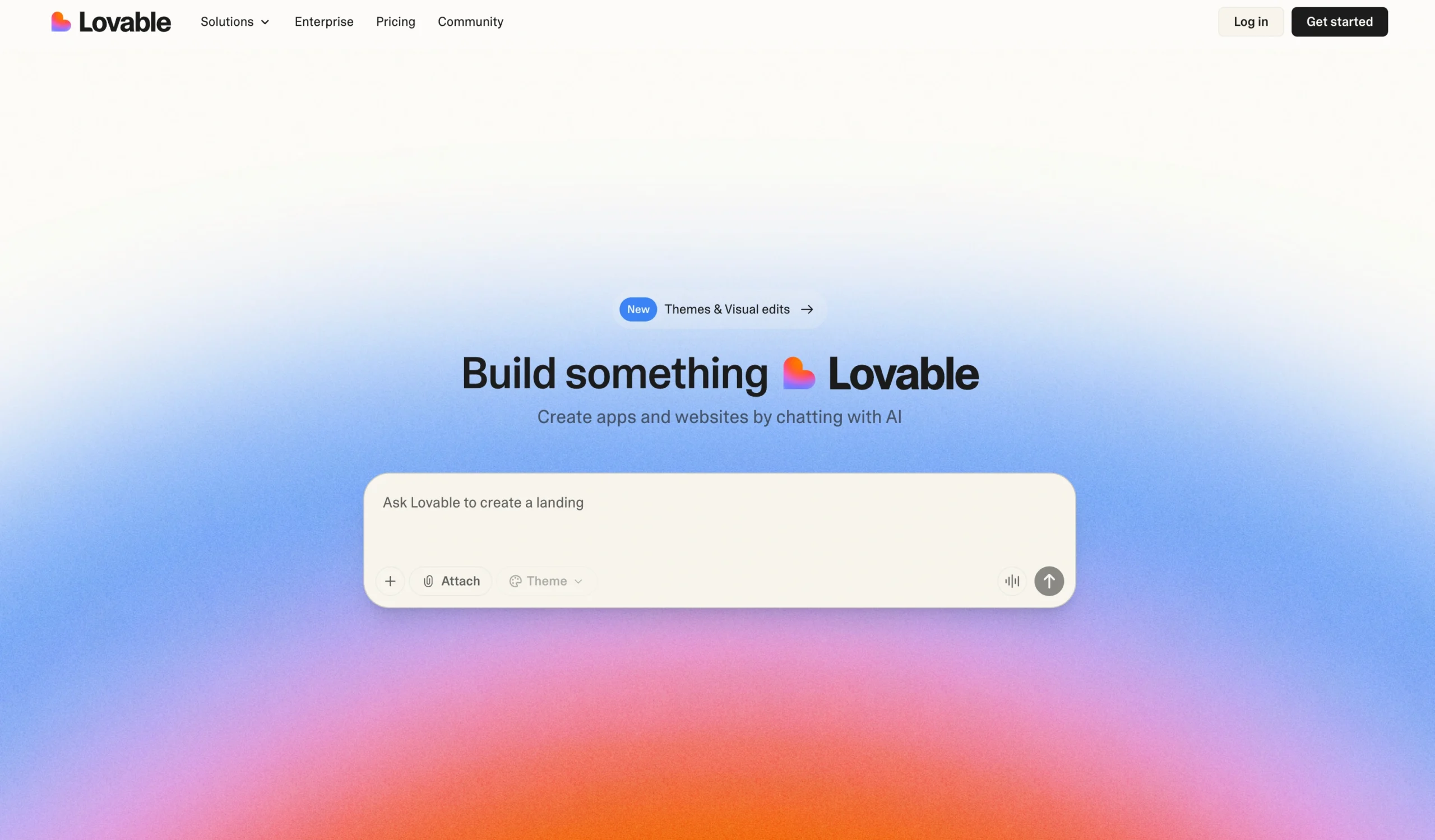
Tools like Lovable, Bubble, and Glide allow non-developers to describe what they want, connect data, and quickly get something that resembles a working app.
It's not hard to imagine that in the future there will be tools capable of generating basic CRMs or management systems, starting from a good prompt: for many standard needs, it will be more than sufficient.
This doesn't change the market structure, however: standard solutions work well, as long as you don't ask them to adapt to more specific needs. If you want a WordPress site with a pre-configured template, it's often the best choice. If you start wanting to change every detail, over time it's better to design a custom solution.
This is where an agency comes in: not to deny Vibe Coding, but to help understand when an AI-generated standard is fine and when you need tailor-made design, architecture, and development.
When does Vibe Coding stop being useful?
Vibe coding becomes problematic when the code stops being a temporary means and becomes the supporting structure: in projects designed to last over time, in core products or in complex systems. Here, code written with vibes tends to transform very quickly into a nightmare.
At first it's just messy, then difficult to extend and risky to modify: every change costs more than having designed well from the start.
The problem worsens when large or distributed teams come into play. The vibe, by its nature, lives in the head of whoever wrote the prompt at a specific moment. Those who come later struggle to read choices and reasoning, ending up working "around" the system.
When it comes to security, then, error is inadmissible: cybersecurity, sensitive data, critical performance cannot allow ambiguity. In these cases, vibe coding introduces uncertainty where clear rules are needed instead.
The key distinction, therefore, is not between good code and bad code, but between code that's born to discover and code that's born to support. Vibe Coding serves the first, engineering serves the second.
So, is it possible to develop something using only vibe coding?
A person who is not "in the field" today can actually start from scratch and arrive at something that resembles a working app. Vibe Coding tools and no-code platforms really lower the entry threshold.
They're great for prototypes, MVPs, small automations: they cover the first part of the journey well, transforming an idea into something visible and interactive.
Code is not the only skill you need. Even without writing by hand, you're deciding flows, logic, permissions, error handling, security, and privacy.
These platforms free you from the effort of writing code, but not from the need to understand what you're building. Software needs to be maintained, corrected, evolved: without technical literacy and without expert direction, sooner or later the limit arrives.
In practice: engineering remains relevant. It just arrives at a later moment.
AI, developers and new skills
Probably, the work of many developers will change. Those who remain stuck on the idea of being only code experts risk having a narrower role.
However, spaces open up for hybrid figures, capable of:
Designing digital products and services
Using AI to accelerate prototyping and development
Translating business needs into prompts and coherent systems.
Ensuring quality, security, and scalability over time.
More than substitution, it's repositioning: from code producers to technical and strategic partners in system design.
What is the role of an agency like ours?
At sixeleven we use AI every day. Not to replace human activity, but to free its potential: less time on repetitive operations, more energy on strategic choices and complex problem solving.
For us, every product must be developed with a human first approach: we strongly believe in our creativity and in the skills of our developers. All this without demonizing AI, which in many cases has been a great help to us.
For example, it was vitally important for the development of the new PANORAMA -Solutions for a Healthy Planet platform: to expand the global reach of the project, we introduced automatic translation into 14 languages, thanks to tools based precisely on artificial intelligence. We talked about it in detail here.
If you have a project and want to start creating initial prototypes, Vibe Coding allows you to give shape to your ideas. But to ensure they transform into a success story, it's essential to rely on expert hands.
We're here for that!

LISTENING IS THE FIRST CHAPTER OF EVERY STORY.
And we can’t wait to write yours.
LISTENING IS THE FIRST CHAPTER OF EVERY STORY.
And we can’t wait to write yours.
Contacts
sixeleven srl sb
Largo Montebello 40/M
10124 Turin - Italy
TAX Code / VAT Number 10182610013
Certificazione ISO 9001:2015 - Certificate ID: 002181-1-IT-1-QMS
GET IN TOUCH —
Contacts
sixeleven srl sb
Largo Montebello 40/M
10124 Turin - Italy
TAX Code / VAT Number 10182610013
Certificazione ISO 9001:2015 - Certificate ID: 002181-1-IT-1-QMS
GET IN TOUCH —
What is Vibe Coding and why it won't replace real developers (yet)
Focus
By now, everyone knows it: artificial intelligence has brought the world of software development to a breaking point with the past. Every day, new tools appear promising to do everything "for you," with a monthly subscription and without hiring anyone.
Over the past year, the term Vibe Coding has become very popular, moving from industry jargon to become the word of the year according to the Collins Dictionary.
A name that effectively describes the results it promises: the creation, through artificial intelligence, of websites and applications without actually writing a single line of code, but only by indicating, through prompts, the characteristics that such software must have.
For many, Vibe Coding is the symbol of how AI is redefining creativity and productivity, opening the door to the ideas and creativity of those who are not industry professionals.
Like every major phase of change, it's time for concerns, ethical-moral doubts, and a general sense of uncertainty about the future to emerge. For this reason, we decided to write an article that could analyze the impacts of this technology. Because the question is not "will AI replace developers" but "who decides what the software does and with what responsibilities"?
How does Vibe Coding work?
Vibe Coding represents a new approach to programming, in which users express their intentions using natural language, and AI transforms thought into executable code.
In this way, Vibe Coding allows AI to be used as a programming assistant, automating the most tedious processes and opening the doors of software development even to those who have no experience in the field.
Vibe Coding follows a very specific philosophy, which prioritizes experimentation over other aspects such as structure and performance: the spirit is "first you create, then you refine." This allows developers to work in a more agile context, enabling real-time prototypes and facilitating innovation through more flexible methods.
Vibe Coding was an innovation initially born as a tool for experienced developers, to facilitate the creative process and quickly test new prototypes, eventually to be perfected before being released to the public. Only later was it proposed to the general public as a solution to create websites and applications independently "without knowing how to code"
A fascinating idea, which is often told as the beginning of the end for developers. However, we believe this is a partial narrative.
Not just a matter of code.
The most enthusiastic promote Vibe Coding as a magic wand for building digital products without skills. The most skeptical, instead, dismiss it as something immature, full of errors, destined to remain inferior to any human developer.
One thing must be made clear right away: these services are very young, and it's reasonable to expect that the technical quality of the outputs will improve rapidly.
Code, in fact, is by its nature a sequence of precise instructions, based on consolidated best practices and standards: an area in which AI can become increasingly effective. For this reason, the interesting question is not "who writes better code?", but "what kind of code are we producing, and for what context?
The idea of truly "Code Free" development is misleading for two reasons: Vibe Coding is not magic. To use it you need foundations in UX and UI, attention to compliance, and the ability to formulate clear prompts. You must know how to translate an idea into instructions comprehensible to an AI model. It devalues the work of programmers, presenting it as superfluous. In reality, they are the ones who ensure that websites, apps, and platforms function over time in a safe and sustainable way.
When does it make sense to use Vibe Coding?
Vibe Coding works particularly well during exploratory phases, when ideas are still in motion and nothing is actually defined. Moments of prototyping, where you're not building but rather trying to understand if it's worth building something.
It's also useful when working on rough demos or MVPs (minimum viable products), to show drafts to a client, a stakeholder, or a team to make a decision: here what's needed is to make the idea tangible, rather than create a finished system, destined to last over time.
Vibe Coding is therefore an excellent ally for reducing the time between an idea and output, unlocking creative flow and making visible in a short time what would otherwise remain abstract.
Finally, Vibe Coding is useful during the learning phase: for exploring a new technology, writing perfect code is not the priority. First you need to understand how a system reacts, then eventually fix it.
The real issue: standard solutions versus custom solutions.
It's often overlooked that Vibe Coding naturally lends itself to proposing standard solutions. You may have noticed, for example, that illustrations produced by Artificial Intelligence tend to be similar to each other, even if they're the result of different prompts written by different people.
If the digital market has always offered pre-packaged websites based on templates, CRMs, management systems and vertical software with locked features, and "ready-made" platforms that solve common problems, Vibe Coding accelerates this trend.
Tools like Lovable, Bubble, and Glide allow non-developers to describe what they want, connect data, and quickly get something that resembles a working app.
It's not hard to imagine that in the future there will be tools capable of generating basic CRMs or management systems, starting from a good prompt: for many standard needs, it will be more than sufficient.
This doesn't change the market structure, however: standard solutions work well, as long as you don't ask them to adapt to more specific needs. If you want a WordPress site with a pre-configured template, it's often the best choice. If you start wanting to change every detail, over time it's better to design a custom solution.
This is where an agency comes in: not to deny Vibe Coding, but to help understand when an AI-generated standard is fine and when you need tailor-made design, architecture, and development.
When does Vibe Coding stop being useful?
Vibe coding becomes problematic when the code stops being a temporary means and becomes the supporting structure: in projects designed to last over time, in core products or in complex systems. Here, code written with vibes tends to transform very quickly into a nightmare.
At first it's just messy, then difficult to extend and risky to modify: every change costs more than having designed well from the start.
The problem worsens when large or distributed teams come into play. The vibe, by its nature, lives in the head of whoever wrote the prompt at a specific moment. Those who come later struggle to read choices and reasoning, ending up working "around" the system.
When it comes to security, then, error is inadmissible: cybersecurity, sensitive data, critical performance cannot allow ambiguity. In these cases, vibe coding introduces uncertainty where clear rules are needed instead.
The key distinction, therefore, is not between good code and bad code, but between code that's born to discover and code that's born to support. Vibe Coding serves the first, engineering serves the second.
So, is it possible to develop something using only vibe coding?
A person who is not "in the field" today can actually start from scratch and arrive at something that resembles a working app. Vibe Coding tools and no-code platforms really lower the entry threshold.
They're great for prototypes, MVPs, small automations: they cover the first part of the journey well, transforming an idea into something visible and interactive.
Code is not the only skill you need. Even without writing by hand, you're deciding flows, logic, permissions, error handling, security, and privacy.
These platforms free you from the effort of writing code, but not from the need to understand what you're building. Software needs to be maintained, corrected, evolved: without technical literacy and without expert direction, sooner or later the limit arrives.
In practice: engineering remains relevant. It just arrives at a later moment.
AI, developers and new skills
Probably, the work of many developers will change. Those who remain stuck on the idea of being only code experts risk having a narrower role.
However, spaces open up for hybrid figures, capable of:
Designing digital products and services
Using AI to accelerate prototyping and development
Translating business needs into prompts and coherent systems.
Ensuring quality, security, and scalability over time.
More than substitution, it's repositioning: from code producers to technical and strategic partners in system design.
What is the role of an agency like ours?
At sixeleven we use AI every day. Not to replace human activity, but to free its potential: less time on repetitive operations, more energy on strategic choices and complex problem solving.
For us, every product must be developed with a human first approach: we strongly believe in our creativity and in the skills of our developers. All this without demonizing AI, which in many cases has been a great help to us.
For example, it was vitally important for the development of the new PANORAMA -Solutions for a Healthy Planet platform: to expand the global reach of the project, we introduced automatic translation into 14 languages, thanks to tools based precisely on artificial intelligence. We talked about it in detail here.
If you have a project and want to start creating initial prototypes, Vibe Coding allows you to give shape to your ideas. But to ensure they transform into a success story, it's essential to rely on expert hands.
We're here for that!
LISTENING IS THE FIRST CHAPTER OF EVERY STORY.
And we can’t wait to write yours.
LISTENING IS THE FIRST CHAPTER OF EVERY STORY.
And we can’t wait to write yours.
Contacts
sixeleven srl sb
Largo Montebello 40/M
10124 Turin - Italy
TAX Code / VAT Number 10182610013
Certificazione ISO 9001:2015 - Certificate ID: 002181-1-IT-1-QMS
GET IN TOUCH —