
Here are some examples of corporate videos that hit the mark
Focus
How do you convey the spirit of your brand without resorting to a product or service promo?
That's exactly where the corporate video comes in: a short film, usually under ten minutes, that effectively communicates a brand, its story, the audience it speaks to, and its core values.
The goal is to build an emotional reading of the brand — one that exists independently of any opinion about individual products. A well-crafted corporate video has the power to embed brand awareness deep into the minds of large audiences: a branding opportunity that's simply too valuable to pass up.
But what does it take to create an effective corporate video? We've handpicked some of the best examples from recent years to find out together.
1. Why make a corporate video?
A corporate video is a cornerstone of digital communication. It lets you leverage the most engaging format of the moment — video — to deliver a message that strongly positions your brand.
Unlike traditional advertising, corporate videos allow brands to explore a variety of creative approaches to express their identity, giving it deeply emotional undertones that resonate with the target audience.
The creative freedom of corporate videos helps overcome the instinctive skepticism we've all developed after seeing one too many ads for products or services.
There are, in fact, several types of corporate videos: manifesto videos, for instance, tie a brand's identity to something larger, turning it into a symbol of something that transcends the brand itself. Then there are brand experience videos, which translate a brand's qualities into an aesthetic and sensory experience. Rather than telling a story, they serve a positioning purpose. Finally, anthem videos, often tied to a sponsorship. The brand aligns itself with a major event and a universal message, without directly talking about itself.
To show just how effective corporate videos can be, we've selected three outstanding examples that we'll walk you through in detail below.
2. What's the secret behind a great corporate video?
A great corporate video is one that strikes a chord with the viewer — capturing attention and leaving a lasting impression.
Of course, there's no "universal formula" for a successful corporate video. There are, however, solid foundational practices worth following to give a brand's message the best chance of landing.
Rather than listing rules and best practices, let's dive straight into the good stuff with a selection of examples — chosen after some lively internal debate.
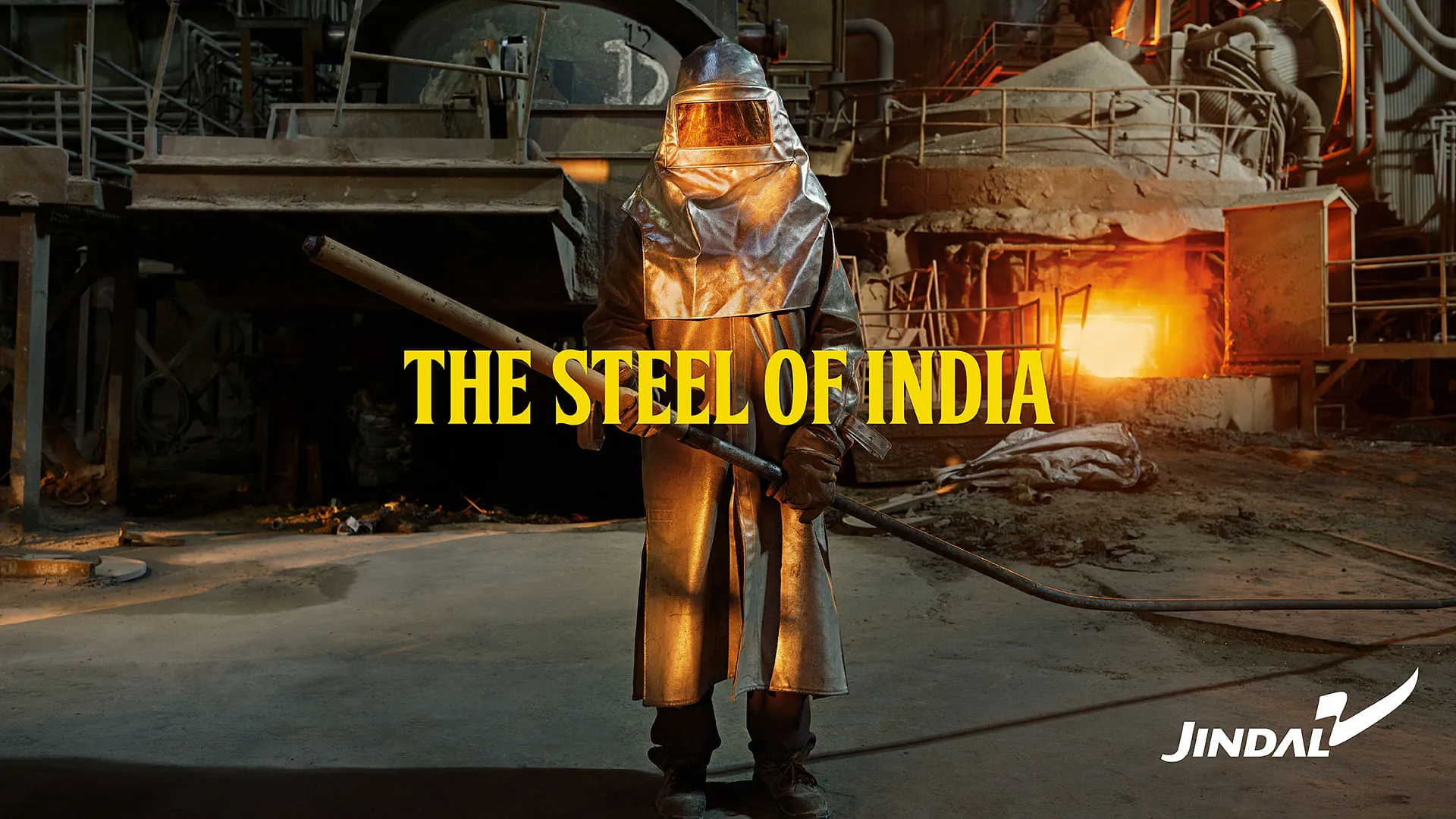
Jindal — The Steel of India.
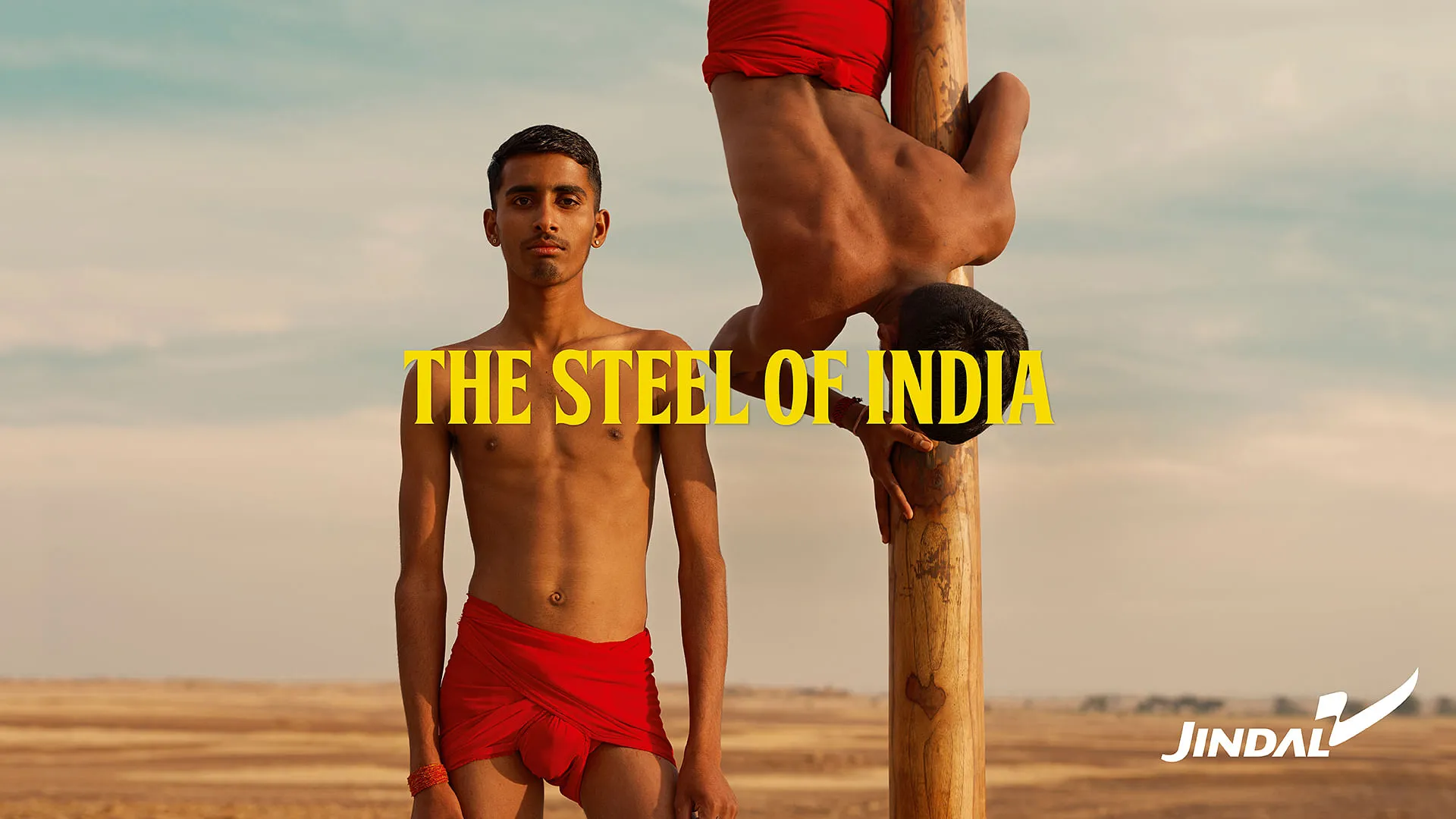
A textbook manifesto video: a two-minute short film that doesn't promote a steel product but builds an identity equation — Jindal steel is the backbone of India.
The film plays on scale. It starts inside the steel mills, then expands outward to the heart of the country, alternating between urban and rural landscapes in their most authentic form. The editing juxtaposes sparks from the steelmaking process with atmospheric imagery, drawing a visual parallel between the strength of the material and the strength of the people.
Even the soundtrack follows this logic: it's composed using the actual sounds of steel — an experimental approach that transforms an industrial product into musical material. The goal? To go beyond the physical properties of the metal and tell the story of what the brand truly represents. The film ties corporate identity to a national narrative: resilience, progress, determination.
There's no mention of tonnage, facilities, or market share. Jindal becomes a cultural symbol, tapping into national pride and shared identity. Viewers don't walk away thinking "Jindal makes steel" — they walk away feeling that Jindal is India.
Air France — Taking Elegance to New Heights.
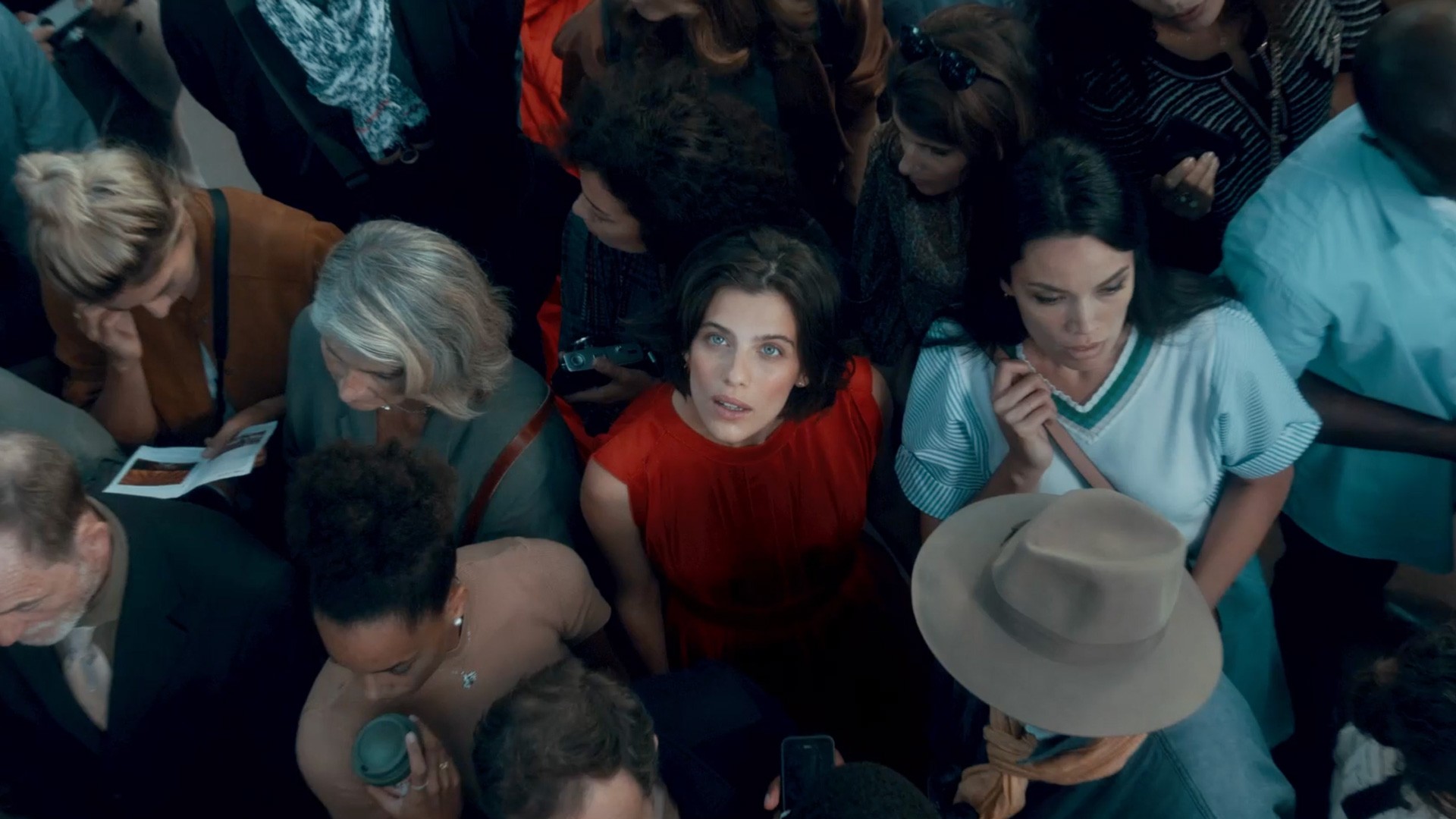
This one doesn't tell a story — it makes you feel a positioning. It's a brand experience corporate video: every frame is designed to evoke a sensation, not to explain who Air France is. A woman in a red gown with an endless train ascends the Eiffel Tower, step by step, with grace and lightness. She's not a passenger — she's an allegory for the airline and for France itself.
The scenes unfold evoking hospitality, haute cuisine, attention to detail — the brand's qualities translated into images, without ever showing a plane. At the top of the tower, the protagonist walks through an imaginary sea of clouds: the suspended moment of flight, rendered as pure visual poetry. It's no coincidence that everything feels so deeply French.
Air France is a state-backed airline, and this video is the natural result: the brand doesn't just evoke France — it embodies it. The Eiffel Tower, the soundtrack — a reinterpretation of "Les Moulins de Mon Cœur" by Michel Legrand, sung by Juliette Armanet — the film shot entirely in Paris and the Île-de-France.
Every creative choice reinforces the equation: flying Air France means flying with France. No fleets, no routes, no deals. Just the art de vivre transformed into a visual experience.
Viewers don't think about a plane ticket — they think of elegance as a way to travel, and to live.
Eli Lilly — Never Over
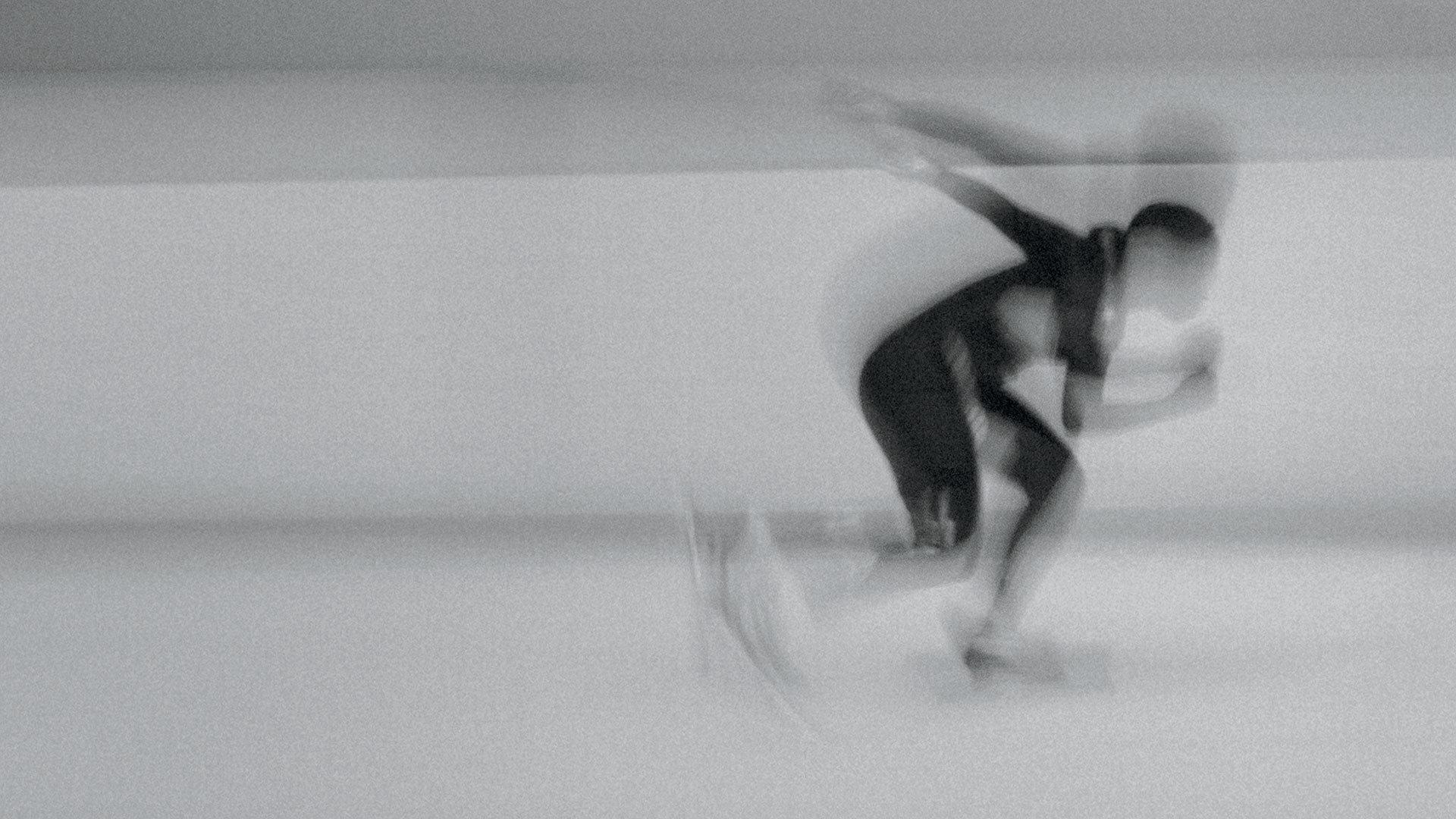
A third approach, entirely different. Here, the brand neither tells its own story nor builds a sensory experience — it aligns itself with a greater cause. "Never Over" is an anthem, a sponsorship-driven corporate video in which Eli Lilly ties its identity to the Milan Cortina 2026 Winter Olympic and Paralympic Games.
The spot, roughly one minute long, is built on archival footage spanning nearly a century. The voiceover is drawn from a 1950s educational film about the scientific method, marking the steps of research — observe, hypothesize, experiment, test — while the directors alternate between images of scientists and athletes across decades, with a documentary style that strips away spectacle and zeroes in on dedication and daily effort.
The parallel is the heart of the video: the perseverance of an athlete chasing gold mirrors that of a pharmaceutical company that has spent 150 years working to change the course of disease. The message isn't "buy our drugs" — it's "our fight never ends" — just like that of every competitor on the track. The tone is restrained, anti-rhetorical, almost whispered.
No glossy testimonials, no triumphant score. Just the raw voice of the 1950s and the editing doing the heavy lifting. A pharmaceutical company that never mentions pharmaceuticals — only resilience and progress.
3. The power of corporate video, in our view at sixeleven
Make them however you want, but make them well: corporate videos offer a creative freedom we're especially fond of, because they allow for an interpretation of a brand's spirit and identity that's free from commercial constraints.
This type of video is perfect for giving shape to a vision — and that's the mindset we bring to every project.
For Fondazione Ufficio Pio, for example, we created a simple yet deeply meaningful video. The instrumental body of Compagnia di San Paolo recently celebrated 430 years of activity — over four centuries of social commitment and fighting inequality.
With a stripped-back concept, we were able to deliver a powerful message: that of a Foundation deeply rooted in its community, one that has played a pivotal role in Turin's history over time. Footage of the city's streets builds up to the grand finale: the Fondazione Ufficio Pio logo projected onto Turin's icon, the Mole Antonelliana.
To discover how we told the story of an entire year of celebrations, you can read the full case study here.
LISTENING IS THE FIRST CHAPTER OF EVERY STORY.
And we can’t wait to write yours.
LISTENING IS THE FIRST CHAPTER OF EVERY STORY.
And we can’t wait to write yours.
Contacts
sixeleven srl sb
Largo Montebello 40/M
10124 Turin - Italy
TAX Code / VAT Number 10182610013
Certificazione ISO 9001:2015 - Certificate ID: 002181-1-IT-1-QMS
GET IN TOUCH —
Contacts
sixeleven srl sb
Largo Montebello 40/M
10124 Turin - Italy
TAX Code / VAT Number 10182610013
Certificazione ISO 9001:2015 - Certificate ID: 002181-1-IT-1-QMS
GET IN TOUCH —
Here are some examples of corporate videos that hit the mark
Focus
How do you convey the spirit of your brand without resorting to a product or service promo?
That's exactly where the corporate video comes in: a short film, usually under ten minutes, that effectively communicates a brand, its story, the audience it speaks to, and its core values.
The goal is to build an emotional reading of the brand — one that exists independently of any opinion about individual products. A well-crafted corporate video has the power to embed brand awareness deep into the minds of large audiences: a branding opportunity that's simply too valuable to pass up.
But what does it take to create an effective corporate video? We've handpicked some of the best examples from recent years to find out together.
1. Why make a corporate video?
A corporate video is a cornerstone of digital communication. It lets you leverage the most engaging format of the moment — video — to deliver a message that strongly positions your brand.
Unlike traditional advertising, corporate videos allow brands to explore a variety of creative approaches to express their identity, giving it deeply emotional undertones that resonate with the target audience.
The creative freedom of corporate videos helps overcome the instinctive skepticism we've all developed after seeing one too many ads for products or services.
There are, in fact, several types of corporate videos: manifesto videos, for instance, tie a brand's identity to something larger, turning it into a symbol of something that transcends the brand itself. Then there are brand experience videos, which translate a brand's qualities into an aesthetic and sensory experience. Rather than telling a story, they serve a positioning purpose. Finally, anthem videos, often tied to a sponsorship. The brand aligns itself with a major event and a universal message, without directly talking about itself.
To show just how effective corporate videos can be, we've selected three outstanding examples that we'll walk you through in detail below.
2. What's the secret behind a great corporate video?
A great corporate video is one that strikes a chord with the viewer — capturing attention and leaving a lasting impression.
Of course, there's no "universal formula" for a successful corporate video. There are, however, solid foundational practices worth following to give a brand's message the best chance of landing.
Rather than listing rules and best practices, let's dive straight into the good stuff with a selection of examples — chosen after some lively internal debate.
Jindal — The Steel of India.
A textbook manifesto video: a two-minute short film that doesn't promote a steel product but builds an identity equation — Jindal steel is the backbone of India.
The film plays on scale. It starts inside the steel mills, then expands outward to the heart of the country, alternating between urban and rural landscapes in their most authentic form. The editing juxtaposes sparks from the steelmaking process with atmospheric imagery, drawing a visual parallel between the strength of the material and the strength of the people.
Even the soundtrack follows this logic: it's composed using the actual sounds of steel — an experimental approach that transforms an industrial product into musical material. The goal? To go beyond the physical properties of the metal and tell the story of what the brand truly represents. The film ties corporate identity to a national narrative: resilience, progress, determination.
There's no mention of tonnage, facilities, or market share. Jindal becomes a cultural symbol, tapping into national pride and shared identity. Viewers don't walk away thinking "Jindal makes steel" — they walk away feeling that Jindal is India.
Air France — Taking Elegance to New Heights.
This one doesn't tell a story — it makes you feel a positioning. It's a brand experience corporate video: every frame is designed to evoke a sensation, not to explain who Air France is. A woman in a red gown with an endless train ascends the Eiffel Tower, step by step, with grace and lightness. She's not a passenger — she's an allegory for the airline and for France itself.
The scenes unfold evoking hospitality, haute cuisine, attention to detail — the brand's qualities translated into images, without ever showing a plane. At the top of the tower, the protagonist walks through an imaginary sea of clouds: the suspended moment of flight, rendered as pure visual poetry. It's no coincidence that everything feels so deeply French.
Air France is a state-backed airline, and this video is the natural result: the brand doesn't just evoke France — it embodies it. The Eiffel Tower, the soundtrack — a reinterpretation of "Les Moulins de Mon Cœur" by Michel Legrand, sung by Juliette Armanet — the film shot entirely in Paris and the Île-de-France.
Every creative choice reinforces the equation: flying Air France means flying with France. No fleets, no routes, no deals. Just the art de vivre transformed into a visual experience.
Viewers don't think about a plane ticket — they think of elegance as a way to travel, and to live.
Eli Lilly — Never Over
A third approach, entirely different. Here, the brand neither tells its own story nor builds a sensory experience — it aligns itself with a greater cause. "Never Over" is an anthem, a sponsorship-driven corporate video in which Eli Lilly ties its identity to the Milan Cortina 2026 Winter Olympic and Paralympic Games.
The spot, roughly one minute long, is built on archival footage spanning nearly a century. The voiceover is drawn from a 1950s educational film about the scientific method, marking the steps of research — observe, hypothesize, experiment, test — while the directors alternate between images of scientists and athletes across decades, with a documentary style that strips away spectacle and zeroes in on dedication and daily effort.
The parallel is the heart of the video: the perseverance of an athlete chasing gold mirrors that of a pharmaceutical company that has spent 150 years working to change the course of disease. The message isn't "buy our drugs" — it's "our fight never ends" — just like that of every competitor on the track. The tone is restrained, anti-rhetorical, almost whispered.
No glossy testimonials, no triumphant score. Just the raw voice of the 1950s and the editing doing the heavy lifting. A pharmaceutical company that never mentions pharmaceuticals — only resilience and progress.
3. The power of corporate video, in our view at sixeleven
Make them however you want, but make them well: corporate videos offer a creative freedom we're especially fond of, because they allow for an interpretation of a brand's spirit and identity that's free from commercial constraints.
This type of video is perfect for giving shape to a vision — and that's the mindset we bring to every project.
For Fondazione Ufficio Pio, for example, we created a simple yet deeply meaningful video. The instrumental body of Compagnia di San Paolo recently celebrated 430 years of activity — over four centuries of social commitment and fighting inequality.
With a stripped-back concept, we were able to deliver a powerful message: that of a Foundation deeply rooted in its community, one that has played a pivotal role in Turin's history over time. Footage of the city's streets builds up to the grand finale: the Fondazione Ufficio Pio logo projected onto Turin's icon, the Mole Antonelliana.
To discover how we told the story of an entire year of celebrations, you can read the full case study here.
LISTENING IS THE FIRST CHAPTER OF EVERY STORY.
And we can’t wait to write yours.
LISTENING IS THE FIRST CHAPTER OF EVERY STORY.
And we can’t wait to write yours.
Contacts
sixeleven srl sb
Largo Montebello 40/M
10124 Turin - Italy
TAX Code / VAT Number 10182610013
Certificazione ISO 9001:2015 - Certificate ID: 002181-1-IT-1-QMS
GET IN TOUCH —